Make it make sense.
Read the meaning and follow the example. Open “Start here,” attempt an answer, then compare your reasoning.

BPV Academy Coach · Guided practice
Bring your curiosity, your experience and the part that does not make sense yet. Coach gives you a place to work through the thinking, one useful question at a time.
Available now: guided exercises with written explanations and practice tasks. Conversational AI and saved learner progress are in development.
Connect what you already notice, question and check in everyday life to the thinking behind Cx, QA/QC and building systems.
Read the meaning and follow the example. Open “Start here,” attempt an answer, then compare your reasoning.
Open “Go deeper.” Trace the assumptions, responsibilities and evidence. Decide what you still need to know.
Answer independently, then discuss the differences. Choose one gap to work through together.
Build the foundation · Then question the details
OPR, BOD and Cx Plan work together. Learn what each contributes, then open a question and explain your reasoning before reading the answer.
A room used for critical operations needs acceptable environmental conditions during a loss of normal utility power.
An invented scenario. The team still has to define “acceptable,” the outage conditions and the required duration.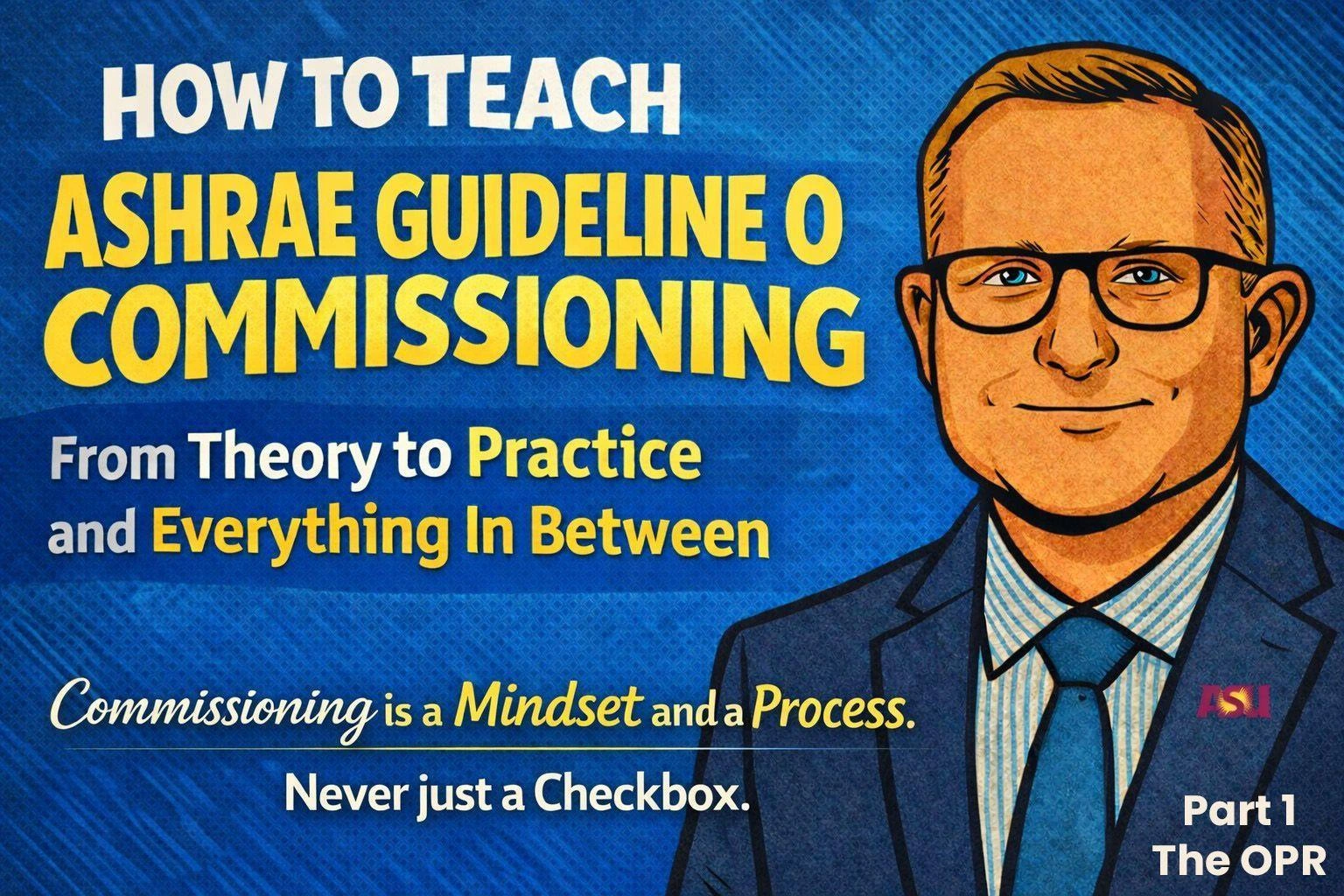 Open the original graphic
Owner’s Project Requirements
The OPR records the intended use, owner expectations, constraints and criteria for success. It gives the team a common destination.
The owner makes requirement decisions, informed by users, operators and the project team. Cx may facilitate development as agreed.
“Reliable” can mean different things to different people. Make the expected service clear before choosing a solution.
For this room, clarify which environmental conditions matter, the starting conditions and loads, the outage to address, the duration, allowable interruption and recovery. Agree the criteria using the applicable project requirements.
It is a useful goal, but several decisions are still missing. What function must continue? Which conditions matter, and within what limits? For how long? Who establishes those answers? Ask before inserting a convenient temperature or duration. This exercise deliberately supplies no project thresholds.
Try it yourself Write three questions for the owner. Name the people who could help answer each one.
First clarify the revised need and assess whether it is achievable. Ask the design team to review the assumptions and dependencies. Trace the consequences into the OPR, BOD, verification coverage, scope and schedule through the project’s change process. A new request is the start of that conversation, not evidence that the existing design can deliver it.
Try it yourself List one affected decision in each document and who needs to resolve it.
Basis of Design
The BOD records the design approach and its reasoning: choices, assumptions and supporting calculations. It connects the proposed solution to the OPR.
The design team develops and updates the design reasoning. Cx review can question alignment with the OPR; design responsibility remains with the designer.
A list of selected equipment tells you what was chosen. You also need to understand why it should meet the need.
Explain how the proposed power, cooling and controls arrangement would support the agreed room conditions during the defined outage. Identify dependencies, calculation assumptions and the reasons for the choices.
Ask what requirement that choice serves and how the proposed arrangement delivers it. What capacity and response are assumed? What must remain available for the cooling to work? Look for the design reasoning and supporting information, rather than treating the equipment name as the explanation.
Try it yourself Connect one owner criterion to a design decision, an assumption and a supporting calculation or explanation.
Equipment count alone cannot answer that. Trace the defined outage through the shared dependency. Ask the responsible designer how the proposed arrangement meets the room requirement and what supports that conclusion. The shared source may matter differently under different failure scenarios; establish the facts before declaring the design adequate or defective.
Try it yourself Write one review question that identifies the requirement, the dependency and the explanation needed.
Commissioning Plan
The Cx Plan organizes the commissioning work: scope, people, activities, resources, timing and documentation. It develops with the project.
The Cx provider normally coordinates the plan with team input. Authorship, review and decision authority follow the project’s delivery arrangements and agreements.
A clear requirement and a good design still need coordinated reviews, readiness checks, testing, issue resolution and operator preparation.
Connect the room requirement to reviews and an agreed verification approach. Identify prerequisites, responsible people, authorized test conditions, records, issue handling and the acceptance decision. Include relevant training and handover activities.
A date leaves the important coordination unanswered. Who confirms readiness? Who prepares and reviews the procedure, authorizes the work, performs it, witnesses it and records the results? What criteria apply? Who handles an unexpected result? Actual outage testing needs qualified people and approved procedures; this is a document-planning exercise.
Try it yourself Draft a planning row: requirement, method, prerequisites, roles, timing, required evidence and decision authority.
Start with the agreed criterion and required evidence. A pass label alone does not establish what conditions occurred. Identify what is missing, what the available records support and who is authorized to decide the disposition. Resolve the evidence gap through the project process, including further verification if needed. Keep any remaining limitation visible.
Try it yourself State what is demonstrated, what remains unproven and the next responsible action.
The OPR supplies the agreed criteria. The BOD explains the proposed design response. The Cx Plan organizes verification. Actual observations and test records supply evidence of what happened under the recorded conditions.
Trace the whole chain: requirement → design response → planned check → recorded result → disposition of any gap. A completed document or a “pass” label cannot replace the missing link.
Work through the chain with your teamThese are original BPV learning exercises, not quoted standard provisions or project requirements. Responsibilities and acceptance follow the project’s agreements. Use the applicable publication and approved project documents for actual work.
This is the beginning
These exercises are a starting point. A training program gives you room to work through documents, receive feedback and revisit the parts that need practice. We agree the sessions, review opportunities and follow-up before you commit.
BPV Academy is the learning and development platform from BPV Solutions, founded by Marcus Myers. Coach is part of that growing learning experience.