
Your next chapter starts with a question
YES.
YOU.
CAN.
You can learn this.
You can get good at this.
You can build a future in it.
Your age or your last job does not decide what you can learn next. Start with curiosity. Build understanding. Practice until you can explain what you are doing and why.
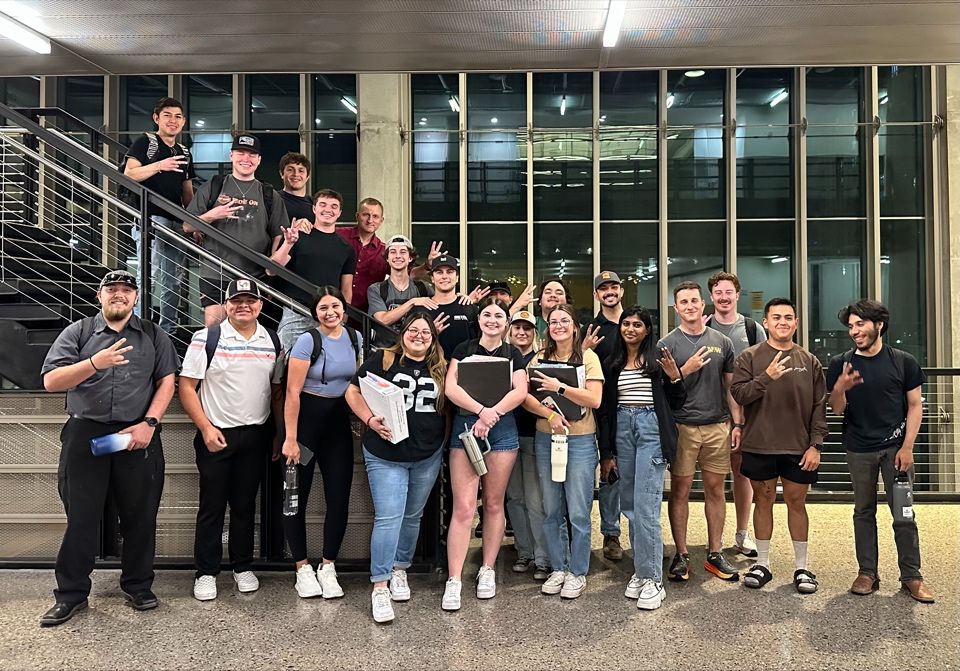
New to technical work? You have a place to start.
Connect what you already notice, question and check in everyday life to the thinking behind Cx, QA/QC and building systems.
Start here
Cx means
commissioning.
“Commissioning is a quality-focused process for enhancing the delivery of a project. The process focuses upon verifying and documenting that the facility and all of its systems and assemblies are planned, designed, installed, tested, operated, and maintained to meet the Owner's Project Requirements.”
ASHRAE Guideline 0-2005 definition, as taught in Marcus Myers’s CON 494/598 Introduction to Building Commissioning syllabus.
In practice: begin with the Owner’s Project Requirements (OPR), the documented needs and expectations the project must meet. Verify the work and keep evidence showing whether those requirements are met.
The process addresses planning, design, installation, testing, operation and maintenance. It considers the facility’s systems and assemblies, including their connections. The agreed commissioning scope defines the systems and activities included.
Explore the definition, phrase by phrase
Every phrase has a job. Here is how Marcus connects the definition to the work.
1. Quality-focused
Quality starts with a clear requirement. What must this building do for the people who use it? Make that expectation clear before deciding how to check it. Performance, reliability and risk belong in that conversation.
2. Process
Cx is a coordinated sequence of activities and decisions across a project. Define responsibilities, communicate, review the work and carry unresolved issues forward until they receive an accountable response.
3. Enhancing the delivery of a project
Help the team carry the owner’s needs through decisions, construction and handover. Find gaps early enough to address them and give the next person useful information to work from.
4. Verifying
What would demonstrate that the requirement was met? Compare the work and its performance with the agreed criteria. A completed form needs a result someone can understand and trace to the requirement.
5. Documenting
Keep a usable record of what was reviewed or tested, the conditions, the expected and observed results, the issues and their resolution. Someone else should be able to follow the evidence and understand what remains unresolved.
6. The facility and all of its systems and assemblies
Could each component work while the overall system fails? Follow the interfaces and responsibilities as well as the equipment. Power, cooling, controls, enclosures and the people who operate them affect one another. Define the commissioned scope and the connections that must be addressed.
7. Planned, designed, installed, tested, operated and maintained
Planned: establish the OPR, scope, team, responsibilities and initial Cx Plan during predesign.
Designed: connect the OPR to the Basis of Design (BOD), drawings, specifications, sequences and the means to verify performance.
Installed: review relevant submittals and verify installation and startup readiness through the agreed checks and records.
Tested: compare observed performance with expected results under defined conditions. Record issues, corrections and retesting. Testing occurs at the appropriate points in the project, including deferred or seasonal tests where required.
Operated: support the operating team with training and usable system information, then review performance under actual use and agreed follow-up conditions.
Maintained: establish the information, access, responsibilities and ongoing practices needed to sustain performance and identify drift.
The work continues after handover. What information, training and access will operators need to sustain performance? Commissioning does not replace the responsibilities of designers, contractors, manufacturers or operators.
8. To meet the Owner’s Project Requirements
The OPR is the reference for judging the result. Trace the owner’s needs and agreed criteria through the design, installation, testing and operating evidence. Keep changes visible and accepted through the project’s agreed process.
Try it: choose one owner requirement. Explain what each phrase asks the team to do and what evidence you would expect at each lifecycle step.
Read Marcus’s original definition breakdown on LinkedIn
Find something that makes you curious
There is more than
one way into this work.
Data centers, semiconductor facilities, hospitals and campuses depend on systems that work together. So do the buildings we use every day. Learn how to understand, connect and verify those systems, and you have more directions to explore.
Building systems & Cx
Learn what equipment should do and how to check its installation and performance.
Data centers
Learn how power, cooling and controls are checked before operation.
Semiconductor facilities
Learn how facility systems are checked, documented and handed over to operators.
Energy & building assessments
Use observations, audits and data to identify where improvements may be needed.
Controls & integration
Follow signals, connect systems and question what the dashboard tells you.
Building enclosure
Understand how walls, roofs, windows and doors manage air, water and heat.
Try the thinking
You already know
how to ask a question.
Now make it a useful one.
A room feels warm.
The screen says 72°F.
Before anyone changes a setting, what would you want to know?
Explore a first question
Does 72°F show the setting or a measurement?
First check what the number represents. If it is a measurement, confirm the sensor and location. Then compare the required room conditions with the measurements available.
That is a small example of a bigger skill: understanding what information means before acting on it.
Progress you can build on
Inch by inch.
“Inch by inch, life is a cinch.
Mile by mile, life is a trial.”
My mother told me this growing up. It has stayed with me, and it captures how I want to help you learn.
Marcus Myers · Founder, BPV Academy
Practice with BPV Academy CoachYou do not have to understand everything today.
You will not become an expert overnight. A class can give you a foundation, useful questions and a place to begin. Expertise grows through practice, feedback and experience over time.
Start with one idea. Explain it in your own words. Try it in a different example. Find the gap, then work on that next. You may connect with something immediately or need to revisit it over several weeks. Both are reasonable starting points.
We look for evidence of progress: what you can explain, what you can apply and where you still need support.
Take one useful step
What can you work on today?
Choose a question. You can use these prompts on your own, with a mentor or with your team.
I want it to make sense.
Pick one term from your work. Explain it without notes, using an example you already understand. Compare your explanation with a reliable source. What did you leave out?
Practice making connectionsI want to know if I can use it.
Try a different example before looking at the answer. Explain your decision and the evidence behind it. A familiar answer is a starting point; applying the idea elsewhere gives you another useful check.
Work through an exampleI need help finding the gap.
Bring your attempt, the point where you got stuck and the sources you checked. That gives a mentor something specific to work through with you.
Bring your question to MarcusWhat happens after a one- or two-day class?
Return to the important ideas, retrieve them without notes and use them in new examples. Check the reasoning and correct mistakes. Then revisit the work after some time has passed. A packed agenda cannot tell us what you will still understand and apply later.
The amount and timing of practice depend on your starting knowledge, the task and your opportunities to use it. We agree a manageable learning plan rather than promise everyone the same finish date.
How do we make room for different learners?
We begin with what you already know and what you need to do. If an explanation does not connect, we try a different example, work through a smaller step or revisit a prerequisite. Questions help us adjust the teaching.
A regular, realistic practice habit is more useful than a promise to study every night that you cannot keep. For company programs, managers also need to protect time for practice and feedback.
How can the guidance help when Marcus is not in the room?
Keep the questions, worked examples and checklists close to the task. Use them to explain your reasoning, challenge assumptions and decide what still needs evidence. Record the question you cannot resolve so your next discussion is focused.
You can also use our written AI practice prompt to rehearse questions in a separate AI tool. Check its technical claims against authoritative sources and applicable project requirements. It does not replace instructor review or project authorization.
Try the lesson and its AI practice promptWhat support is included in my program?
Before you commit, we agree the preparation, instruction, practice, assessment and follow-up included in your program. That includes the coaching sessions or review opportunities, their timing and the period of support.
You bring your effort and questions. BPV provides the agreed teaching, feedback and next steps. Your company helps create opportunities to practice. The aim is growing independence with a clear way to ask for help.
Plan the learning and follow-upThe learning design draws on research about spaced review, recalling information, worked examples and explanatory questions. Read the Institute of Education Sciences practice guide
A personal invitation from Marcus
Bring your questions.
Let’s build from there.
I use real project stories, drawings and practical examples to make unfamiliar ideas understandable. Then we work through the thinking together.
Your goal might be a first technical role, stronger field skills or the confidence to lead a team. A clear learning plan gives your effort direction. We can connect what you already know with what you need to practice next.